
Where should a porta potty go on my property or job site?
Pick flat, firm ground first. ADA Standards section 302.1 calls for surfaces that are stable and slip resistant, and that rule matters even on a driveway or a gravel pad. A standard unit runs about 44 by 48 inches on the ground and stands roughly 92 inches tall, so give it a little breathing room from fences, low branches and parked cars. Keep it off soft lawn if you can. It sinks, and then it tips.
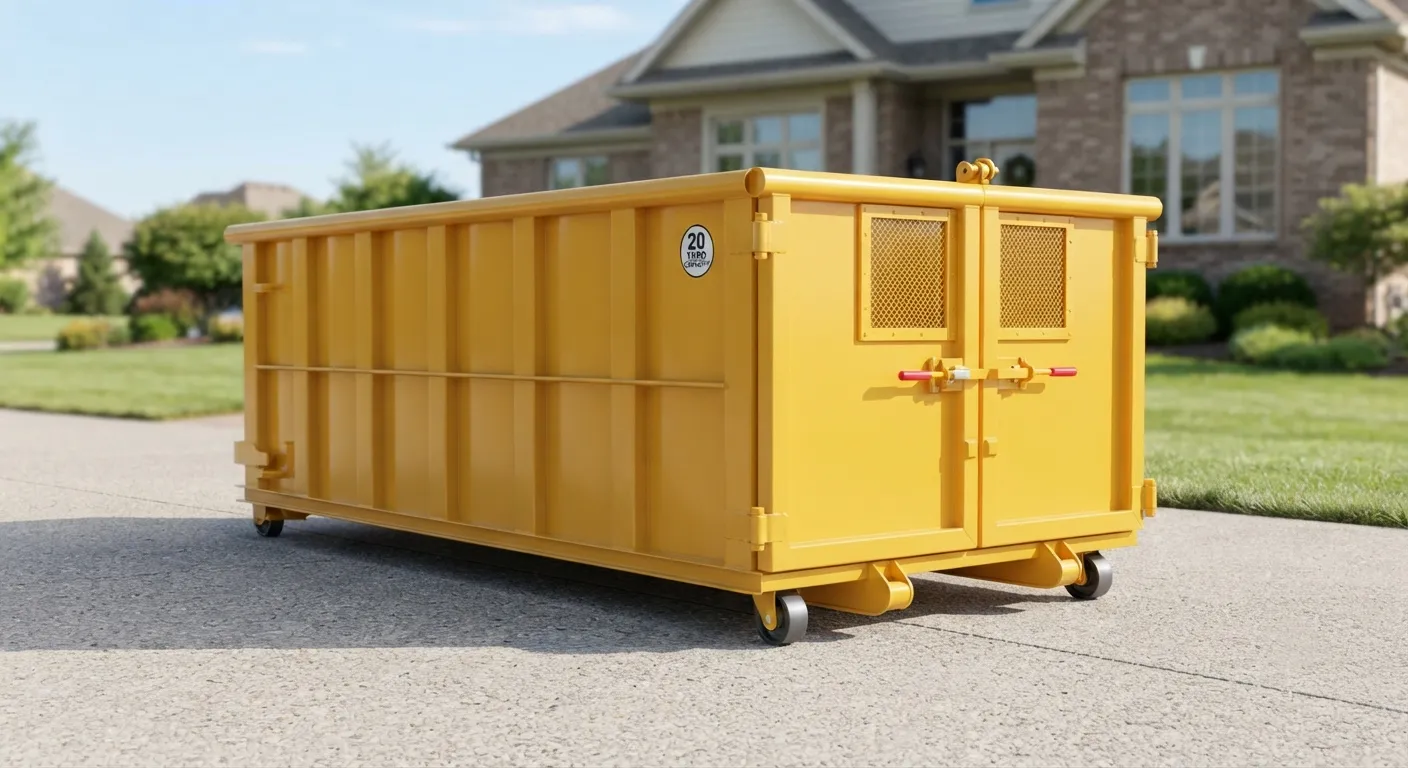
Think about the service truck's path before you commit to a corner of the lot. The truck needs to back up close enough to reach the tank, and if you're also renting a roll-off dumpster rental for the same job, that delivery needs about 60 feet of straight clearance behind the truck. Cramming both a construction dumpster rental and a standard porta potty rental into the same tight gap usually ends with someone moving one of them twice. Plan the layout on paper first, especially for anything covered under construction site services.
If you're setting up for a crowd instead of a crew, check our porta potty placement guide companion page on counts, and look at sightlines to the venue entrance. Events near Auburn draw from Sumner, 8.9 miles south, and Bonney Lake, 10.0 miles south, so plan for guests who don't know the property.
What are the porta potty placement rules for accessibility?
Every cluster of portable toilets needs at least one accessible unit, and never fewer than one no matter how small the cluster, per ADA Standards section 213.2. That unit needs a 32 inch clear door opening under section 404.2.3, a 60 inch turning circle inside per section 304.3.1, and a route to reach it that's at least 36 inches wide per section 403.5.1. Ramp slope, if you need one to get over a curb or a gravel lip, can't exceed 1:12 under section 405.2.
Door hardware and flush controls matter too. Operable parts need to work with one hand, no tight grasping or twisting, and no more than 5 pounds of force, per ADA Standards section 309.4. Reach ranges top out at 48 inches high and bottom out at 15 inches low under section 308.2.1. An ADA accessible porta potty from Auburn Porta Pros is built around these numbers, not just wide enough to look compliant. If you're staging a wedding or festival, our event restroom rental and wedding restroom rental pages cover layout alongside accessibility.
Do I need a permit for porta potty or dumpster placement?
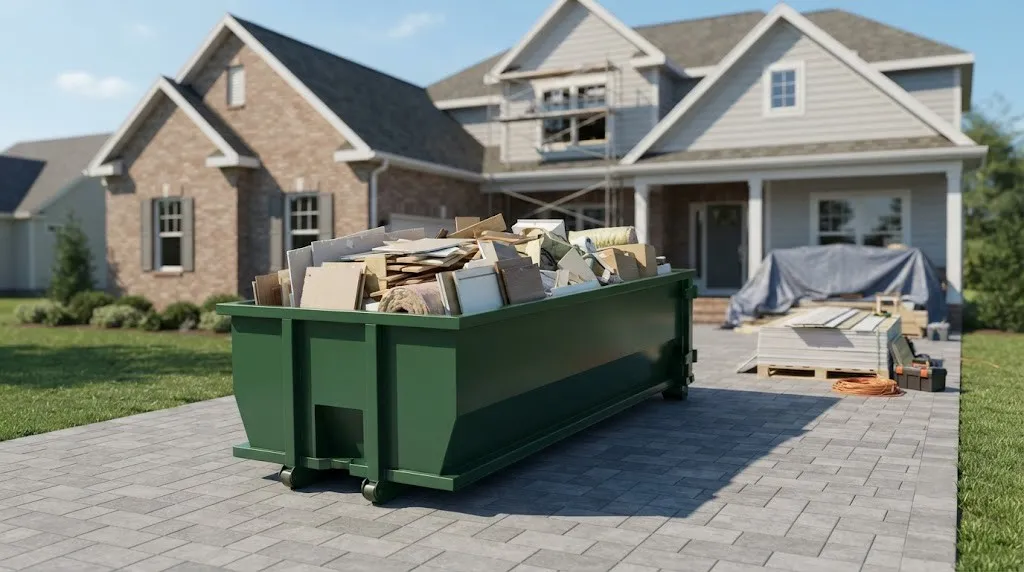
That depends on where the unit sits, and it needs confirming with the City of Auburn before you place anything in a right of way, driveway apron or public sidewalk. We're not naming a specific ordinance here because permit rules and dumpster placement permit cost vary by exact location and by whether the unit blocks a curb cut, a fire lane or a utility access point. If you're planning a roll-off dumpster rental that has to sit in the street or partly over a sidewalk, call the city first, not after delivery.
Our dumpster permit requirements page has more on what to ask when you call. The same caution applies to temporary fence rental placement around a job site perimeter: fencing near a public walkway sometimes needs sign-off too. If your barricades or fence line double as fall protection or crowd control, OSHA 1926.202 requires that barricades meet ANSI D6.1, which matters most on active construction sites layering in a temporary fence rental alongside restrooms.
How many units do I need and how far apart should they be?
OSHA's construction ratio is one toilet for 20 workers or fewer, one toilet and one urinal per 40 workers once you pass 20, and one per 50 once you hit 200 or more, under OSHA 1926.51(c)(1). Spread units out rather than clustering them in one spot; workers walking 200 feet across an active site skip the trip. Farm crews fall under a different rule: OSHA 1928.110 requires a facility within a quarter mile walk, one per 20 hand-labor employees, which matters for any farm and agricultural restrooms job outside Auburn proper.
If your crew is applying paint, coatings, herbicides or insecticides, add a wash station near the work zone, not just the restroom cluster. OSHA 1926.51(f)(1) requires washing facilities specifically for that kind of contaminant exposure. A general handwashing setup still needs soap and towels or a hand-drying device under 29 CFR 1910.141(d)(2); sanitizer alone doesn't satisfy it. If a unit like an Ozark River portable sink needs a replacement part such as a pump or spigot, ask Auburn Porta Pros before swapping in something off spec, since a mismatched part can void the wash station's seal. For septic sites and holding tanks that need pumping on a schedule, see septic pumping service or how often to pump a septic tank; a typical residential tank gets pumped every 3 to 5 years depending on size and household load.
Frequently asked questions
How much space does a portable toilet actually need?
A standard unit needs about 4 feet by 4 feet of level ground and close to 8 feet of clearance overhead. Add a couple feet on the service side for the tech's hose and tank access. Check porta potty rental cost for how site access affects delivery fees.
Can I place a porta potty on a sidewalk or street in Auburn?
Usually not without checking first. Right-of-way placement needs confirming with the City of Auburn, and rules shift depending on the block and nearby utility access. Call before delivery, not after the truck shows up.
How far can a porta potty be from the job site?
Keep it inside a normal walking distance for the crew using it. Construction sites generally work best with units spread within 200 feet of active work areas so nobody skips a trip.
Do I need an accessible unit if I only have a few porta potties?
Yes. ADA Standards section 213.2 requires at least one accessible unit in any cluster, even a cluster of two or three. There's no small-site exemption built into that rule.
What happens if a dumpster or porta potty is placed wrong on site?
The crew usually ends up moving it, sometimes twice. Bad placement blocks the service truck, and if it sits in a right of way without a permit, the city can require it moved. Plan the route in with dumpster sizes and dimensions before delivery day.
Next step
Get a delivery date
Tell us the address, the dates and the headcount. We size the order and confirm the route.